
Jaksic Stonemasonry
Workshop and Gallery
Donji Humac 75,
21423 Nerežišća
Island of Brač, Croatia
There are countless buildings for which the building stone was dressed in this workshop. Here are only a few.
Filter of works
Filter

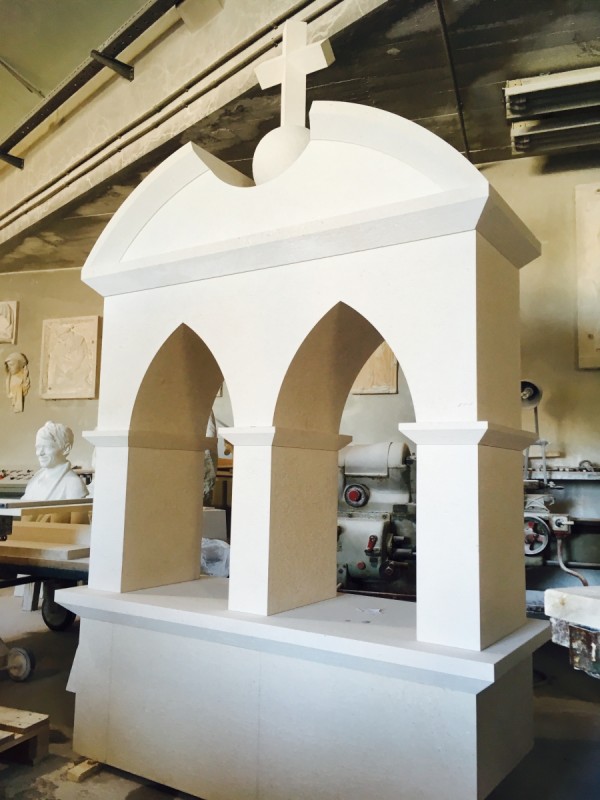


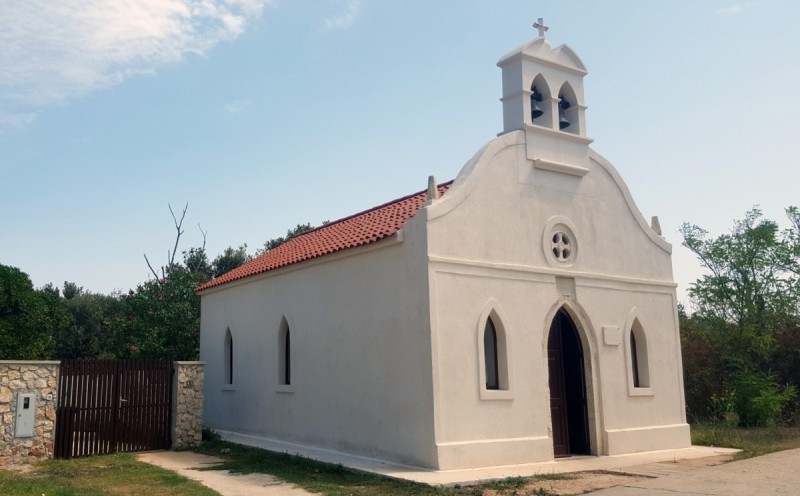
Stone Bell Gable on the Island of Silba
- the bell gable is one of the most recognisable architectural elements of church design.
Placed above the main entrance, it carries the church bells and calls the faithful to prayer.
Beyond its function, the bell gable holds strong symbolism – it lifts the gaze toward the heavens, representing spirituality and the connection between the earthly and the divine. This stone bell gable, located on the island of Silba, was created in our workshop from white Brač limestone. The project involved restoration and the making of a replica of the original gable, which had been damaged over time. Our goal was to produce a faithful reconstruction, preserving the proportions and form of the old structure while ensuring durability and stability through contemporary craftsmanship. The gable features two bells and is crowned with a cross mounted on a sphere, a recognisable silhouette of many island churches. Both the cross and sphere were hand-carved, using traditional tools and methods, and finished with a “punto mlata” hand texture, which gives the surface a unique, tactile character. Each major section was carved from large single blocks of stone — a technically demanding approach that guarantees strength, endurance, and lasting quality. All surfaces were finely polished, giving the form a refined simplicity and elegance that harmonises with the church’s architecture. This project is part of our long-standing work on sacred buildings, where artistry and tradition come together in the service of faith and heritage. Our workshop produces various church elements — altars, amboes, stone floors, wall claddings, and other sacred motifs. We are also deeply engaged in restoration and reconstruction, believing that every stone piece carries a story of cultural continuity. With this new stone bell gable, the church on Silba has regained its authentic appearance. The white Brač stone, precise craftsmanship, and balanced design restore its original harmony and spiritual dignity. The church now stands as a symbol of permanence, faith, and respect for both tradition and the timeless art of stonemasonry.
* All fields are mandatory
* All fields are mandatory